How Long Does a Roof Last in Corpus Christi?
Coastal Bend roofs age faster than bundle ratings suggest. Here are the honest lifespans for shingle, metal and tile in Corpus Christi, and what moves them.
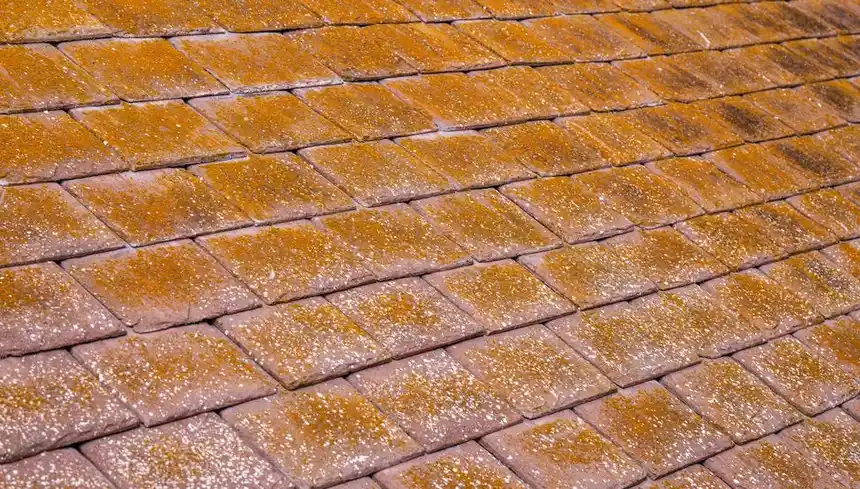
In Corpus Christi, an asphalt shingle roof realistically lasts 12 to 17 years, while standing seam metal lasts 40 to 60 years and tile lasts 40 to 60 years with underlayment renewal around year 20 to 25. Those coastal numbers, not the ratings printed on product bundles, are the ones to plan around, because salt air, Gulf heat, humidity and wind-driven rain age every roofing material faster here than inland.
The Short Answer: Roof Lifespan in Corpus Christi
The gap between a bundle rating and a Coastal Bend reality is the single most expensive misunderstanding in local roofing. A shingle rated for 30 years in a laboratory fails in 12 to 17 years on a Corpus Christi roof, because the rating never faced salt spray, 150-degree attic heat or wind-driven rain. Planning around the coastal number instead of the label number changes every decision that follows: when to inspect, when to repair, when to replace, and what material to choose next.
That honesty cuts both ways. Metal and tile really do last decades here, and their higher up-front prices buy genuinely longer service, not just a longer warranty document. The right question for any homeowner is therefore not how long a product claims to last, but how long it lasts on this coast, installed as a system, with ventilation and flashing done properly.
Lifespan by Material on the Coastal Bend
Architectural asphalt shingle is the most common Corpus Christi roof and the shortest-lived honest option: 12 to 17 years in salt air and Gulf heat. Impact-rated shingle, rated UL 2218 Class 4, stretches that to roughly 15 to 20 years and can earn TWIA premium credits, which is why it appears so often in replacement quotes. Builder-grade 3-tab shingle sits at the bottom of the range and often fails sooner, which is why so many South Side homes face replacement decisions at year 13 or 14.
Standing seam metal runs 40 to 60 years here, and stone-coated steel runs 40 to 50 years, making both the last roof most island and long-term homes ever buy. Clay and concrete tile run 40 to 60 years for the tile itself, but their underlayment, the waterproofing layer beneath, typically needs renewal around year 20 to 25, a fact tile quotes should state plainly. Flat systems vary most by system: TPO, EPDM and built-up roofs run 15 to 30 years depending on system, drainage and maintenance.
Those bands assume competent installation as a system. A shingle roof installed without balanced ventilation, or a metal roof installed with standard fasteners in salt air, will fall short of its band regardless of material, which is why installation quality moves lifespan as much as product choice does.
Why Coastal Roofs Age Faster
Salt air is the first accelerator. Salt spray off Corpus Christi Bay and the Gulf corrodes standard fasteners, flashing and galvanized components, and constant humidity feeds algae and growth that hold moisture against the roof surface. A roof that never dries properly ages from the outside in, and every corroded fastener is a future leak point.
Heat is the second accelerator. South Texas summers push attic temperatures past 150 degrees Fahrenheit, and poor ventilation literally cooks shingles from below. That hidden heat damage is the reason many local roofs die years early with no visible storm event to blame, and it is also the reason ventilation correction is part of every honest replacement.
Wind and UV complete the picture. This is a 145 mph design-wind market, 155 mph on Padre Island and the immediate coast, so fastening patterns and sealed edges are stressed in every wind event, not just in hurricanes. Brutal summer UV degrades shingle surfaces and dries sealants, so the same roof that would age gracefully inland is worked hard on every front here, every single day.
Signs Your Roof Is Near the End
Granules washing into the gutters are the earliest widespread warning: the shingle's protective surface is thinning across the field, not just in one spot. Curling, cupping or cracked shingles, especially across whole slopes rather than one repair area, signal the same field-wide decline. Repeated patch repairs, where each fix buys less time than the last, are the clearest practical sign that patching has become more expensive than replacing.
Inside the home, recurring ceiling stains, attic moisture and daylight visible through the deck all point the same way, as does soft or rotted decking found during inspection. Age alone is also evidence here: a shingle roof past year 15 in Corpus Christi deserves a documented inspection even with no visible leak, because carrier and TWIA conversations begin exactly in that window, and a roof can look fine while being uninsurable.
What Actually Extends Roof Life
Ventilation is the highest-leverage lifespan factor most homeowners never see. Balanced intake and exhaust keep attic temperatures down, protect shingles from below, and prevent the moisture buildup that rots decking. A replacement that corrects ventilation buys years that a replacement ignoring it gives away immediately.
Maintenance is the second lever. Scheduled checks on pipe boots, flashing, sealant and granule loss, with valleys and gutters cleared before hurricane season, catch the small failures that become ceiling stains. Fastener and flashing specification is the third: hot-dip galvanized or stainless fasteners resist the salt corrosion that kills standard hardware, and corrosion-resistant flashing outlasts the cheap alternative by years. None of these levers is glamorous, and together they decide whether a roof lands at the top or the bottom of its lifespan band.
Common Mistakes Homeowners Make
The most expensive mistake is trusting the bundle rating instead of the coastal reality, then being surprised when a 30-year shingle fails at year 14. The second is ignoring the attic entirely, treating the roof as only its visible surface while heat and moisture destroy it from below. The third is patching a dead roof, spending repeatedly on repairs that cannot restore a field whose granules are gone and whose decking is soft. The fourth is choosing the cheapest bid without checking whether it omits underlayment, starter strips, ventilation correction or decking work, since a roof missing layers fails early whatever its material.
Each mistake shares one root: deciding from a single number, a single surface or a single quote, instead of from an inspection, an itemized scope and coastal facts. The fix for all four is the same discipline, and it costs nothing more than an inspection to start.
What to Do Next
Start with a documented inspection that states remaining life honestly, with photos for each finding. From there, the decision framework is straightforward: a sound roof with one damaged area gets a Roof Repair in Corpus Christi, while a field-wide failure inside the coastal age window gets a Roof Replacement in Corpus Christi planned on your schedule. If metal is under consideration, compare its 40 to 60 year life against shingle on lifetime cost through Metal Roofing in Corpus Christi, check the current bands on Roofing Cost Corpus Christi in Corpus Christi, and confirm the details with Roof Inspection in Corpus Christi or the maintenance guidance on Roof Maintenance in Corpus Christi. The answers to every lifespan question are in the Roofing FAQ in Corpus Christi as well, but your own roof's answer starts with its inspection.